- Veeaar Engineering
- Nov 04, 2026
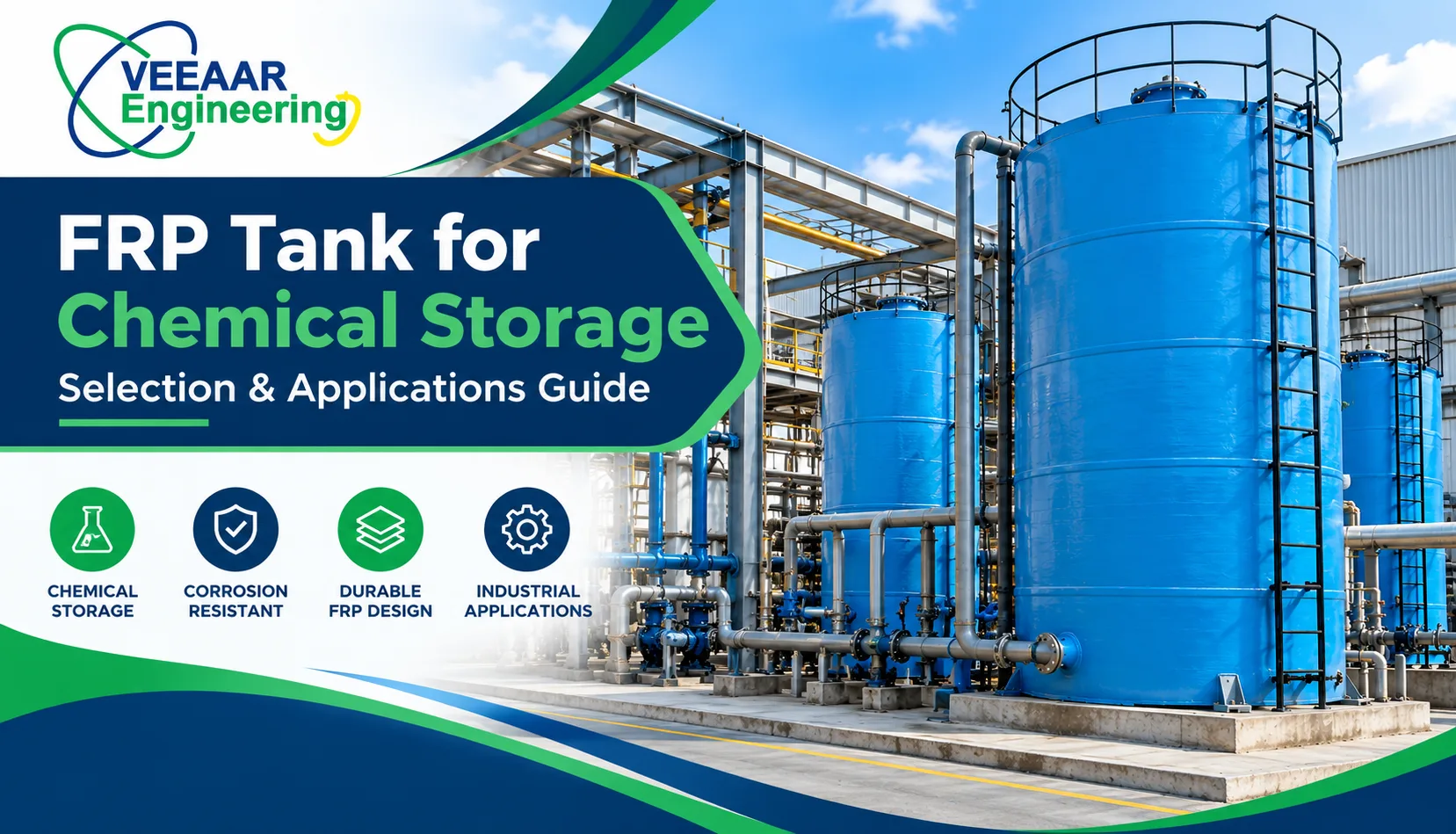
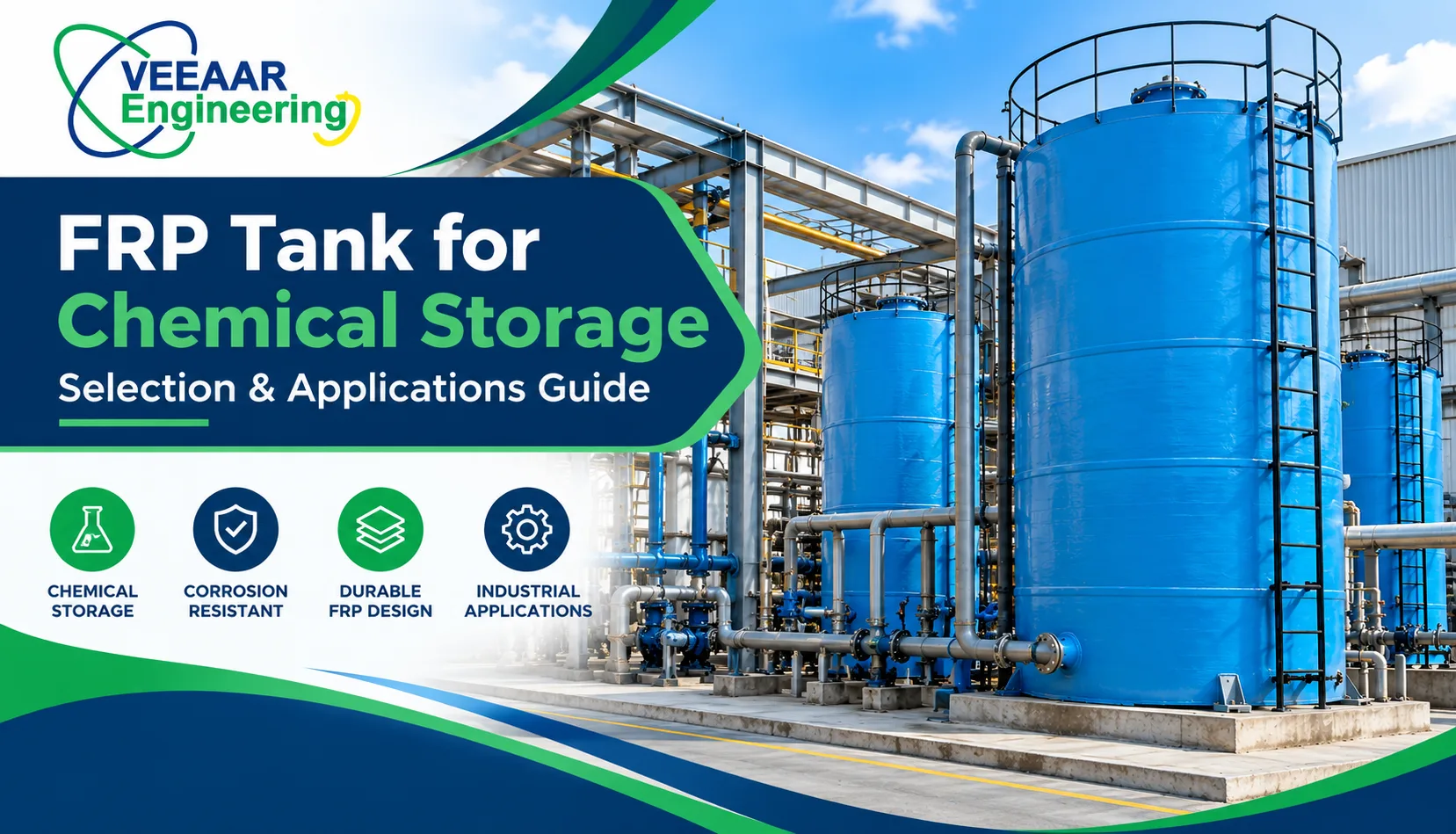
An FRP tank can be an effective chemical-storage solution when its resin system, corrosion barrier, structural laminate, shape, fittings, support and operating limits are engineered for the exact chemical, concentration, temperature and duty. “FRP” is a material family, not one universal specification. A tank suitable for ambient water may be unsafe for a hot acid, solvent mixture or cyclic process.
Start with a written process datasheet covering contents, impurities, concentration range, minimum and maximum temperature, density, vapour, filling and emptying rates, agitation, pressure or vacuum, capacity, location and design life. The manufacturer should confirm compatibility and submit drawings, laminate details, load basis, nozzle schedule, inspection plan and installation requirements before fabrication.
Vee Aar Engineering lists FRP tanksand combined FRP tank and scrubber systems for industrial applications. Buyers should treat website descriptions as the starting point and secure project-specific engineering for the actual stored chemical.
What an FRP Chemical Storage Tank Is
FRP means fibre-reinforced plastic. In a chemical tank, a resin-rich inner corrosion barrier protects the structure from the stored medium, while fibre-reinforced structural layers carry hydrostatic, handling, wind, seismic and other specified loads. An exterior layer protects against the environment and ultraviolet exposure where required.
The material can offer corrosion resistance and lower weight than many metallic alternatives, but performance depends on resin chemistry, glass reinforcement, fabrication quality, curing and operating conditions. Mechanical damage or an incompatible chemical can compromise the barrier even when the outside appears intact.
| Tank element | Function | Buyer check |
|---|---|---|
| Inner surface | Provides chemical-facing finish | Resin, veil and surface quality |
| Corrosion barrier | Resists permeation and chemical attack | Thickness and compatibility basis |
| Structural laminate | Carries operating and external loads | Design method and reinforcement |
| Nozzles and fittings | Connect process and instruments | Loads, material and reinforcement |
| Support or base | Transfers load to foundation | Flatness, anchorage and load basis |
| Exterior layer | Protects against weather and handling | UV, fire and exposure requirement |
Chemical Compatibility Comes First
Provide the full chemical name, concentration range, temperature, impurities and cleaning chemicals. Mixtures can behave differently from pure chemicals, and compatibility may change at higher temperature. Ask the resin supplier or tank manufacturer for written suitability based on the actual service; do not rely only on a generic chart or verbal assurance.
Consider permeation, swelling, softening, cracking and loss of mechanical properties. If the process chemistry can change during upset, dilution or contamination, include those cases. Define whether the tank will be drained, steamed, chemically cleaned or exposed to sunlight while empty.
Why temperature changes the answer
Higher temperature can accelerate chemical attack and reduce laminate strength. Temperature cycling can also create expansion at nozzles, supports and connected piping. State normal, maximum operating and upset temperatures separately and define their duration.
Choose the Resin System and Corrosion Barrier
Common FRP tank resins include different polyester and vinyl ester families, each with its own chemical and temperature range. The manufacturer should select the grade based on written compatibility evidence and curing requirements. A more expensive resin is not automatically suitable for every chemical.
The corrosion barrier typically uses resin-rich construction and compatible surfacing materials. Specify barrier details, workmanship acceptance and cure verification. Pigment, UV additive, fire-retardant formulation or antistatic features can affect properties and must be reviewed as part of the complete system.
Capacity Freeboard and Geometry
Distinguish total geometric volume, working volume and overflow volume. Provide freeboard for level variation, foam, thermal expansion and operating control. Select vertical or horizontal geometry from footprint, foundation, access, transport and process needs. Very tall tanks create hydrostatic and wind demands; horizontal tanks need saddles designed for the shell.
State minimum operating level if mixing, pumping or temperature control depends on it. Include low-level and high-high-level protection. The overflow route must go to a safe, compatible location and should not discharge near the foundation.
Design Loads Beyond Liquid Weight
| Load case | What creates it | Design input |
|---|---|---|
| Hydrostatic | Liquid height and density | Maximum level and specific gravity |
| Wind | Outdoor exposure | Site wind criteria and tank height |
| Seismic | Site motion and contents | Project seismic criteria |
| Nozzle load | Connected piping and valves | Allowable forces and moments |
| Vacuum or pressure | Blocked vent, pumping or process | Defined design pressure range |
| Handling | Lifting, transport and erection | Approved lifting and support plan |
Atmospheric FRP tanks are not automatically designed for pressure or vacuum. A blocked vent, rapid pump-out, steam condensation or poorly sized breather can damage the shell. Define filling and withdrawal rates, vent devices and upset scenarios. Never pressure-test an atmospheric tank without an approved procedure.
Connected piping should be independently supported so it does not impose unreviewed loads on FRP nozzles. Use flexible connections only when the process and mechanical design support them; flexibility does not eliminate the need for alignment.
Nozzles Manways and Accessories
Prepare a nozzle schedule showing size, service, elevation, orientation, flange standard, material and allowable load. Include inlet, outlet, drain, overflow, vent, level, sampling, recirculation and spare connections. Avoid field-drilled openings unless the manufacturer provides an approved procedure and reinforcement design.
Manways must suit inspection and maintenance access while preserving structural integrity. Define covers, gaskets, fasteners, davits, ladders, platforms and guardrails. Gasket and bolt choices must be chemically compatible and tightened using a controlled pattern.
Ventilation Vapour and Emission Control
Vent sizing should consider maximum filling and emptying rates, thermal breathing, gas generation and emergency scenarios. Hazardous or toxic vapours may require closed venting, a scrubber, flame protection or other process safeguards designed by qualified specialists. Do not vent dangerous chemicals into an occupied area.
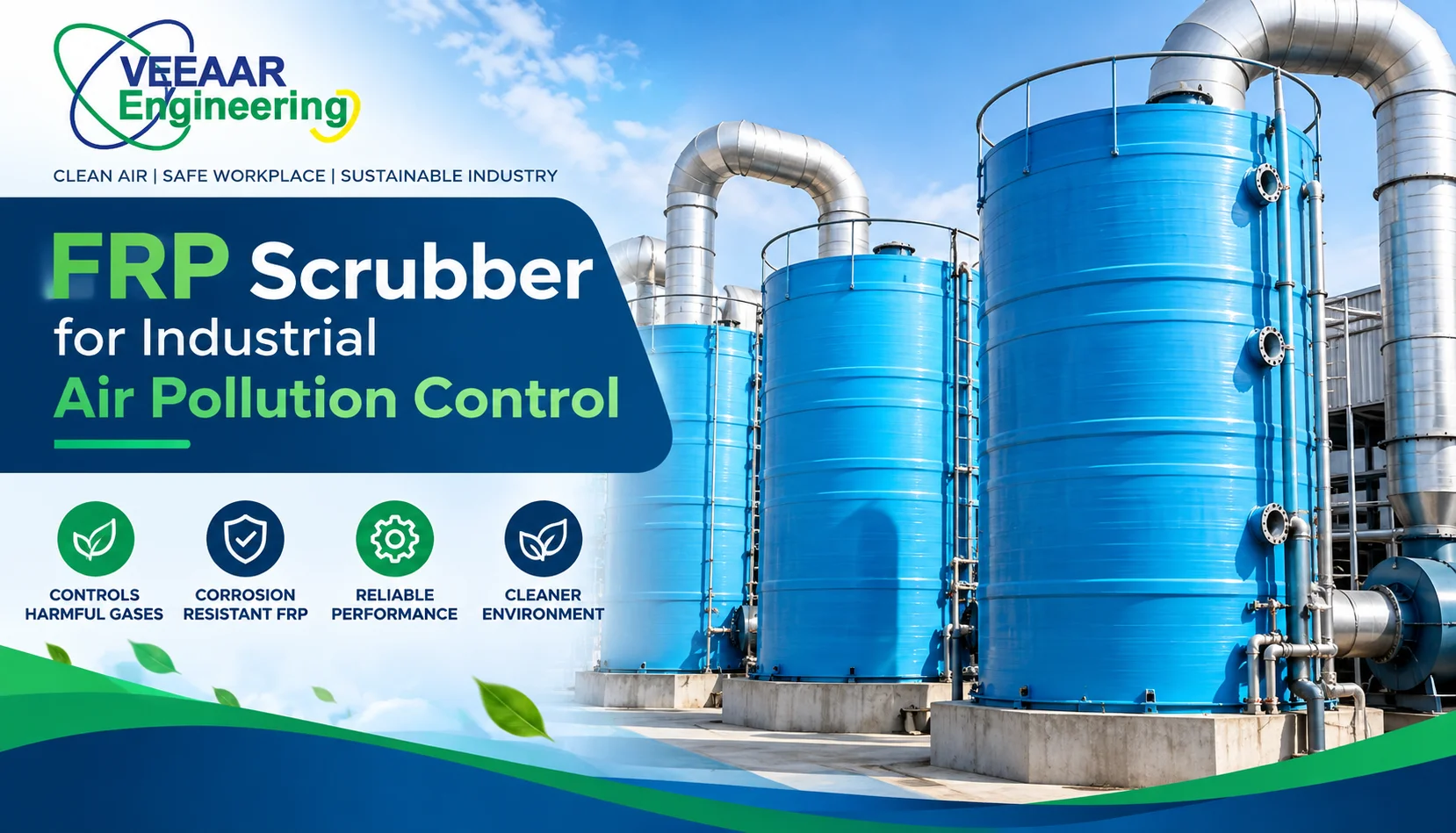
Vee Aar Engineering presents integrated FRP tank and scrubber solutions. An integrated purchase can simplify interfaces, but the project must still define airflow, contaminant loading, materials, pressure drop, monitoring and disposal.
Foundation Support and Anchorage
Vertical flat-bottom tanks need a smooth, level, continuous foundation that supports the entire base. Local high spots, debris or settlement can create damaging stress. Provide a compatible cushion or grout layer where specified and keep drainage away from the base.
Outdoor tanks may need anchorage for wind, seismic or empty-tank conditions. Anchor design should avoid point loads and allow thermal movement. Horizontal tanks require correctly located saddles with suitable contact geometry. Foundation drawings should use the final tank dimensions and loads.
Outdoor Installation and Secondary Containment
Outdoor tanks need UV protection, weather-resistant external finish, storm drainage and access for inspection. Review solar heating of the contents and the empty shell. Protect nozzles and instruments from accidental impact and vehicle movement.
Secondary containment should hold the required spill volume and resist the stored chemical long enough for response. Its drainage, leak detection and rainfall management need design. An unlined concrete bund may not be compatible with every chemical.
Quality Control During Fabrication
| Stage | Quality check | Record |
|---|---|---|
| Raw materials | Resin, glass, veil and batch identity | Certificates and traceability |
| Mould and lay-up | Dimensions and laminate sequence | In-process inspection |
| Cure | Catalyst control and cure condition | Cure or hardness results |
| Visual finish | Voids, exposed fibres, cracks and surface defects | Inspection report |
| Dimensions | Diameter, height, nozzles and tolerances | Final dimensional report |
| Leak test | Approved medium, level and duration | Witnessed test record |
Define acceptance criteria before fabrication. Visual inspection can reveal dry fibre, air pockets, resin-rich pooling, cracks, delamination and poor nozzle transitions. Non-destructive examination or additional testing may be specified for critical service. Repair procedures should be documented and re-inspected.
Request an as-built laminate schedule and final drawing rather than only a sales brochure. The delivered tank should carry durable identification linked to its records.
Transport Lifting and Erection
FRP tanks can be strong in service yet vulnerable to local impact or incorrect lifting. Use only approved lifting lugs, slings, spreaders and support points. Protect nozzles and shell surfaces during transport. Inspect for cracks, scuffs, deformation and damaged fittings upon arrival.
Plan route width, overhead clearance, crane radius and laydown area before dispatch. Large tanks may require site assembly, which needs controlled environment, qualified laminators and inspection. Do not use piping nozzles as lifting points.
Commissioning and Initial Filling
Verify foundation, anchorage, alignment, nozzle loads, vents, instruments, overflow and containment before filling. Clean using an approved method that will not damage the resin. Introduce water or process liquid gradually as the commissioning procedure requires, checking for settlement, leakage and unusual deformation.
Confirm level alarms, interlocks, pumps and vent paths. Record baseline appearance and key dimensions where specified. Handover should include drawings, material details, tests, repairs, operating limits and inspection guidance.
Inspection and Maintenance
- Inspect the exterior for impact, cracks, blistering, discoloration or exposed fibres.
- Check nozzles, supports, anchors, ladders and platforms for movement or damage.
- Monitor leakage, odour, abnormal vapour and changes in stored liquid quality.
- Inspect the inner surface safely during planned outages using a defined procedure.
- Review vent and overflow operation and clear blockages using safe methods.
- Keep piping supports aligned so nozzle loads do not increase over time.
- Use qualified FRP repair methods and verify cure before returning to service.
- Update records after chemical, temperature, piping or operating changes.
Application Examples
Acid or alkali storage
Compatibility of resin, barrier, gasket, fastener and connected piping is central. Include concentration variation, dilution heat, transfer rate and vapour control. Avoid assuming that resistance to one concentration proves suitability for all concentrations.
Water and wastewater treatment
FRP tanks can store dosing chemicals, process water and selected effluents. The manufacturer needs the full composition, solids, cleaning method and temperature. Vee Aar also lists broader water storage tanks and vessels for related duties.
Scrubber recirculation service
Scrubber tanks may see dissolved contaminants, changing pH, temperature and pump vibration. Coordinate tank resin with the gas stream, scrubbing liquid, bleed and maintenance chemicals. Provide access for cleaning and pump isolation.
Procurement Checklist
- Issue a process datasheet with chemical, concentration, impurities and temperature.
- State capacity, geometry, specific gravity, pressure or vacuum and load cases.
- Provide nozzle schedule, instruments, vent, overflow and access requirements.
- Define resin, corrosion barrier, laminate evidence and fabrication standard.
- Include foundation, anchorage, lifting, transport and site access information.
- Specify inspection, leak testing, documentation and witness points.
- Clarify installation, commissioning, training, warranty and repair responsibility.
- Require a deviation list and final as-built dossier.
Common Buying Mistakes
- Requesting a price from capacity alone without chemical and temperature data.
- Using a generic compatibility chart as the complete engineering approval.
- Ignoring impurities, cleaning chemicals, upset temperature or future service changes.
- Connecting rigid piping that transfers excessive loads to FRP nozzles.
- Operating an atmospheric tank under vacuum because the vent is undersized or blocked.
- Installing on an uneven foundation or unapproved saddle arrangement.
- Adding field nozzles without laminate design and qualified repair control.
- Accepting a tank without as-built laminate, inspection and test records.
How to Compare FRP Tank Offers
Normalise offers against the same process datasheet. Compare resin grade, inner veil, corrosion-barrier thickness, structural design method, specific gravity, temperature, pressure range, nozzles, accessories, foundation loads, UV protection, tests, documents, transport and warranty. A lower price may exclude critical fittings or use an unsuitable design basis.
Review Vee Aar Engineering’s About Us and supplier range for context, but approve the purchase only after the project-specific submittal closes every process and mechanical requirement.
A Practical Selection Workflow
- Freeze the chemical service, operating envelope and required capacity.
- Obtain written resin and corrosion-barrier compatibility for all conditions.
- Define geometry, design loads, nozzles, vents, access and containment.
- Review structural calculations, laminate, foundation and piping interfaces.
- Approve fabrication inspection, testing, documentation and repair criteria.
- Plan transport, lifting, erection, commissioning and operator training.
- Maintain an inspection baseline and control every future service change.
Change Management for Stored Chemicals
A tank approved for one service should not be reassigned from its nameplate or original drawing alone. Before any chemical, concentration or temperature change, review resin compatibility, corrosion barrier, gasket, fastener, vent, piping and containment. Even a cleaning chemical used for a few hours can be more aggressive than the normal product.
Use a formal management-of-change record that identifies the new service, evidence reviewed, inspection required and approving engineer. Update tank labels and operating procedures after approval. If compatibility evidence is uncertain, obtain a written assessment from the resin or tank specialist and consider a coupon or other qualified evaluation.
Repair Versus Replacement Decision
Minor local damage may be repairable, while widespread chemical attack, structural cracking, distortion or repeated leakage can justify replacement. Inspect both the inner barrier and structural laminate and determine the cause before repairing. A cosmetic patch over an active compatibility problem will not restore safe service.
A repair specification should define surface preparation, taper, reinforcement, resin, cure, inspection and return-to-service test. Use trained FRP personnel and preserve repair records. Recalculate or seek specialist review when a nozzle is relocated, a large area is rebuilt or the tank duty has changed.
Operating Controls That Protect Tank Life
Set high and high-high level alarms, transfer interlocks and operator response so the tank is not overfilled. Control filling velocity where static, foaming or impact is a concern. Keep vents and overflows unobstructed and inspect them after maintenance or weather events. Protect the shell from hot work, dropped tools and vehicle impact.
Trend level, temperature, chemical concentration and unusual odour or leakage. Small operational deviations can be the first evidence of blocked vents, incorrect transfer, process contamination or laminate damage. Clear ownership between production, maintenance and environmental teams prevents early warnings from being ignored.
Frequently Asked Questions
1. What is an FRP tank?
It is a fibre-reinforced plastic tank with a chemical-resistant inner system and structural laminate designed for the specified storage duty.
2. Are all FRP tanks suitable for chemicals?
No. Suitability depends on the exact chemical, concentration, temperature, resin, corrosion barrier and laminate design.
3. Which resin is best for chemical storage?
There is no universal best resin. Select from written compatibility evidence for the complete service and cleaning conditions.
4. Can an FRP tank operate under pressure?
Only if it is specifically designed and documented for the stated pressure or vacuum. Many storage tanks are atmospheric.
5. How is tank capacity specified?
State total and working capacity, freeboard, maximum level and required overflow volume.
6. Can FRP tanks be installed outdoors?
Yes, when the design includes UV, wind, seismic, temperature, anchorage, drainage and inspection requirements.
7. Does an FRP tank need secondary containment?
The need and capacity depend on the chemical, quantity, site risk and applicable requirements. The containment material must also be compatible.
8. How should piping connect to an FRP tank?
Use aligned and independently supported piping, compatible gaskets and allowable nozzle loads from the manufacturer.
9. How is an FRP tank tested?
Testing may include material checks, visual and dimensional inspection, cure verification and an approved leak test, depending on the specification.
10. Can a damaged FRP tank be repaired?
Many defects can be repaired by qualified specialists using an approved laminate procedure, followed by cure and inspection.
11. How long does an FRP tank last?
Service life depends on compatibility, temperature, fabrication, loading, UV exposure, operation and maintenance; avoid one universal lifespan promise.
12. What should be sent for a quotation?
Send the complete chemical and process datasheet, capacity, geometry, loads, nozzle schedule, site conditions, tests and scope.
Specify Chemical Compatibility Before Tank Capacity
A dependable FRP tank begins with the stored medium and operating envelope, then builds the resin, laminate, fittings and foundation around that evidence. Review Vee Aar Engineering’s FRP tank range and company background, then use the contact page to share the complete process datasheet and request a project-specific technical proposal.