- Veeaar Engineering
- Nov 18, 2026
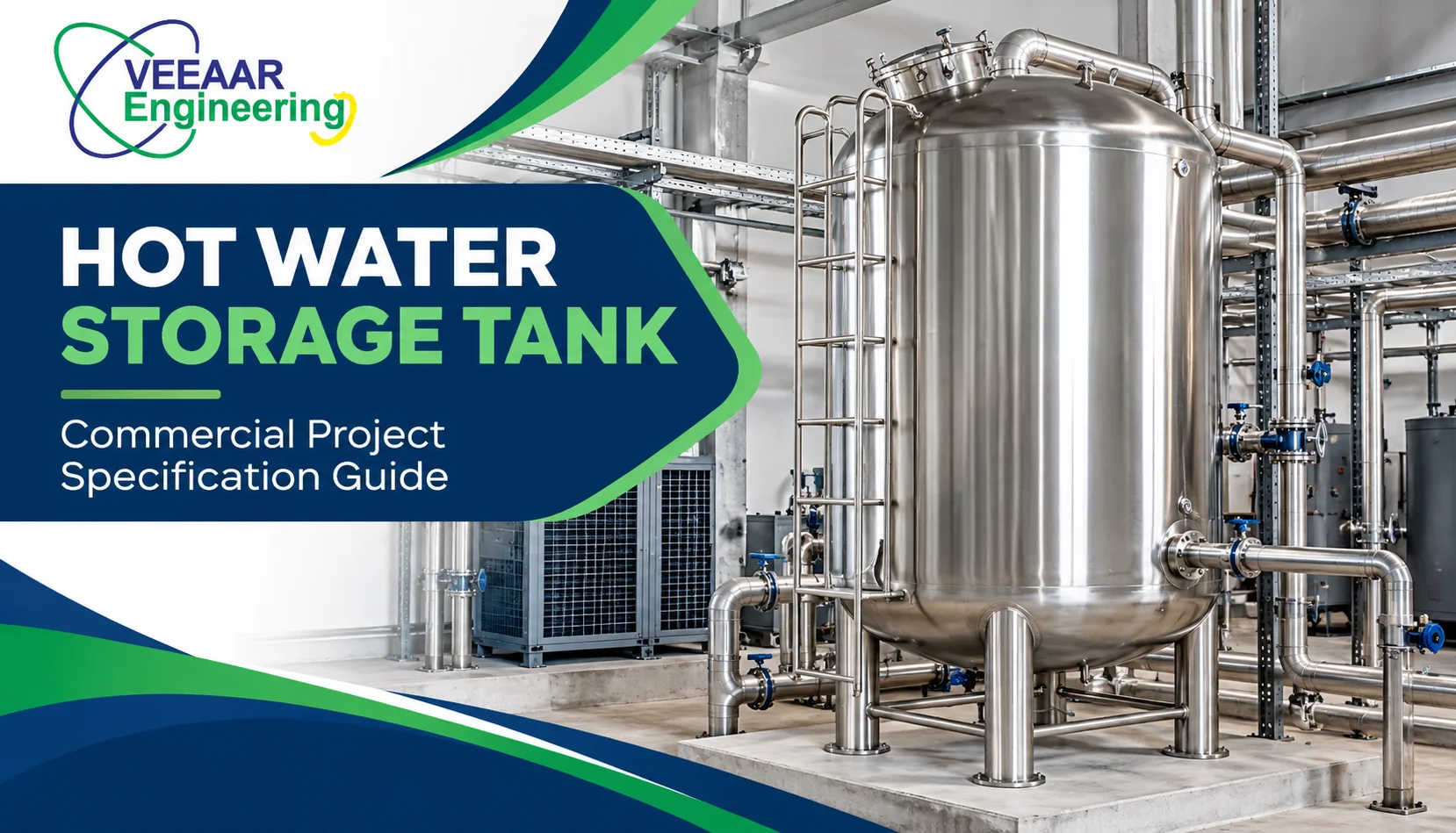
A hot water storage tank supplier should be selected against a written duty, not only tank litres and price. The duty must define usable storage, peak demand, recovery source, operating temperatures, pressure, water chemistry, material or lining, insulation, connections, hygiene controls, safety devices, access, testing and documentation. A tank that is large enough by nominal volume can still deliver poor service if recovery, mixing or recirculation is wrong.
Vee Aar Engineering presents hot water storage tanks for commercial and industrial use and relates them to boilers, solar systems, heat pumps and electric heating. Buyers should ask the supplier to confirm the complete interface and limits of supply. Tank fabrication, heat source, pumps, valves, controls and site installation must work as one system.
Define the Service Before Asking for Capacity
Hotels, hospitals, hostels, kitchens, sports facilities and factories can have similar daily consumption but very different peaks. Build a time-based demand profile showing fixture count, occupancy, simultaneous use, process draws, recirculation losses and cleaning schedules. Identify the temperature required at storage and at outlets, along with any hygiene regime and scald-control strategy.
Separate average demand from the critical peak period. Storage covers short demand above the heat source output; recovery restores temperature between peaks. Oversized storage increases standing losses, footprint and stagnation risk, while undersized storage causes temperature collapse. The optimum balance depends on both energy input and draw pattern.
| Design input | Effect on selection | Evidence needed |
|---|---|---|
| Peak draw and duration | Usable storage and recovery | Demand calculation |
| Heat-source output | Reheat time and coil/exchanger duty | Rated performance data |
| Storage temperature | Capacity, hygiene and safety | Approved operating philosophy |
| System pressure | Tank rating and safety valves | Hydraulic design basis |
| Water chemistry | Material, lining and anodes | Water analysis |
| Plant-room access | Dimensions and installation plan | Survey and route drawing |
Nominal Volume Is Not Usable Hot Water
A tank’s label volume does not equal deliverable volume at the required outlet temperature. Stratification, thermostat position, cold inlet mixing, minimum return temperature and draw rate affect usable capacity. Where a thermostatic mixing valve supplies lower-temperature water, stored energy may serve a larger mixed volume, but the calculation must use realistic temperatures and control performance.
Ask bidders to show the sizing method, peak demand, initial and minimum acceptable tank temperature, incoming water temperature, recovery input, losses and reserve. A transparent calculation makes quotations comparable and reveals whether a large volume is compensating for a weak heat source.
Coordinate Storage and Recovery Capacity
Recovery may come from a boiler, heat pump, solar thermal circuit, electric heater or another source. Each has different flow, temperature and control behavior. A heat pump may recover efficiently at lower temperatures but lose capacity under certain ambient conditions. Solar input varies with weather. Electric elements create electrical load and may provide staged backup.
The supplier should state heat-exchanger surface, coil rating or external exchanger duty at defined entering temperatures and flows. Do not accept a nominal kilowatt value without conditions. Check pressure drop, pump selection and fouling allowance. Vee Aar also describes commercial water heating systems, useful when defining the broader heat-source interface.
Select Material from Water and Duty
| Construction | Potential fit | Key checks |
|---|---|---|
| Stainless steel | Potable or process duty when grade suits chemistry | Grade, welding, passivation and chloride limits |
| Mild steel with lining | Controlled water and suitable protective system | Lining specification, inspection and repair |
| Galvanized steel | Selected duties with chemistry limitations | Coating integrity and temperature compatibility |
| Copper-bearing or special alloy | Specific project requirements | Compatibility, cost and joining method |
| Insulated outer cladding | Energy and personnel protection | Insulation thickness, vapour/weather barrier and access |
Material choice must reflect chloride level, hardness, pH, dissolved oxygen, treatment chemicals, temperature and galvanic connections. “SS tank” is incomplete without a grade and fabrication process. Welding can reduce local corrosion resistance if procedure, shielding, cleaning and passivation are poor. A lined tank is only as durable as surface preparation, application, curing and holiday testing.
Request the allowable water chemistry and maintenance conditions in writing. If sacrificial anodes are used, provide access and an inspection interval. Avoid mixing incompatible metals across nozzles, heaters and piping without an approved transition. The owner’s water treatment plan and supplier warranty conditions must agree.
Pressure Temperature and Safety Requirements
Clarify whether the vessel is vented, unvented or part of a pressurized closed system. State design and operating pressure and temperature, applicable vessel or plumbing requirements and the responsible design authority. A manufacturer’s working-pressure label does not replace system safety design.
The system may require temperature-and-pressure relief, expansion control, vacuum protection, isolation, non-return valves, drains, gauges and high-temperature cut-out. Relief discharge must terminate safely and remain visible where required. Never isolate a heat source from all expansion and relief paths. Final safety components and settings need approval for the jurisdiction and system.
Control Legionella Risk and Scalding
Stored hot water needs a documented hygiene strategy appropriate to the facility and local requirements. It may include storage temperature, periodic thermal disinfection, circulation temperatures, turnover, dead-leg control, monitoring and sampling. The tank layout should avoid stagnant zones and support complete drainage and cleaning where required.
Hot storage temperatures can cause serious scalding. Use correctly selected mixing and point-of-use protection, verify fail-safe behavior and commission outlet temperatures. Hygiene and scald control must be coordinated rather than solving one by ignoring the other. Healthcare and care facilities may require specialist infection-control input.
Insulation and Standing Losses
Specify insulation material, thickness or performance, maximum surface temperature, fire characteristics and outer finish for the location. Indoor plant rooms, rooftop installations and corrosive washdown areas require different cladding. Insulation should be continuous around shell, heads and nozzles as practical, while leaving inspection points and removable components serviceable.
Compare standing-loss data at declared conditions instead of adjectives such as “highly insulated.” A larger tank has more surface area and stored energy, so poor insulation raises operating cost and plant-room heat. Repair damaged vapour barriers or cladding promptly to prevent wet insulation and corrosion under insulation.
Connections and Internal Hydraulics
Nozzle size and location affect stratification, pressure drop, venting and serviceability. Show cold inlet, hot outlet, recirculation return, heat-source flow and return, drain, relief, sensors, inspection openings and spare connections on an approved drawing. Diffusers or baffles may help preserve stratification or avoid short-circuiting when designed for the duty.
Provide thermowells at representative levels rather than relying on one sensor that may not reflect usable storage. Ensure heaters and coils can be removed without dismantling the building. Connection loads from pipework should not be imposed on the shell beyond design allowances; support and flexible coordination belong in the piping design.
Recirculation System Coordination
Commercial systems often circulate hot water to reduce waiting time. The return temperature, pipe losses and balancing determine continuous heat demand. An oversized or poorly balanced pump can destroy stratification and waste energy; an undersized circuit leaves remote outlets cold. Calculate losses, insulate the network and commission balancing at representative conditions.
Connect the return at the location intended by the tank and system designer. Monitor supply and return temperatures and confirm all branches move water. Controls may reduce circulation during unoccupied periods only when hygiene and service requirements allow.
Plant-Room and Delivery Survey
- Measure doors, corridors, stairs, lifts, roof openings and turning clearances.
- Confirm floor loading, plinth, drainage, bunding and seismic restraints where applicable.
- Reserve removal space for heaters, coils, anodes, manways and insulation panels.
- Check electrical supply, ventilation, lighting and safe maintenance access.
- Plan lifting points, delivery date, storage protection and final positioning.
- Verify that future replacement is possible without major demolition.
A sectional, modular or site-fabricated solution may be considered when access is constrained, but every additional joint changes fabrication and testing responsibilities. Complete the route survey before final dimensions are approved, not when the delivery vehicle arrives.
Supplier Submittals and Approval
Request a data sheet, general arrangement, nozzle schedule, material list, insulation detail, design calculations where required, welding procedures, quality plan, controls narrative, electrical data and foundation loads. The submittal should distinguish included items from recommendations and identify all deviations from the inquiry.
Vee Aar’s live site also presents water storage tanks and vessels and commercial water-heating supply. Use these pages to understand available scope, then require project-specific evidence and approved drawings before fabrication.
Factory Testing and Quality Records
| Inspection stage | Typical record |
|---|---|
| Material receipt | Certificates and identification |
| Fabrication | Dimensional and weld inspection |
| Protective lining | Surface preparation, thickness and holiday test |
| Pressure or leak test | Procedure, medium, pressure and result |
| Insulation and cladding | Material and completion inspection |
| Final release | Nameplate, accessories, documents and packing |
Testing must use a safe, approved procedure appropriate to the vessel. Define witness and hold points before manufacture. Confirm calibration of instruments and treatment or disposal of test water. Stainless surfaces should be protected from carbon-steel contamination during fabrication and handling.
A final release note should verify the drawing revision, nozzle orientation, loose accessories, labels, protection and documents. Photograph concealed details before insulation. Packing should keep openings sealed and prevent cladding damage during transport.
Installation and Commissioning
- Inspect the tank and records on arrival before signing an unconditional receipt.
- Position, level and anchor the tank as the approved design requires.
- Connect piping without forcing nozzles and complete relief, expansion and drain paths.
- Install sensors, controls, insulation closures and electrical protection.
- Flush, clean and disinfect the system using the approved procedure.
- Fill, vent, leak-test and verify safety-device operation.
- Balance recirculation, prove recovery, mixing and outlet temperatures under load.
Commissioning should demonstrate the full sequence: heat call, source enable, pump operation, high-limit response, mixing, recirculation and alarms. Record heat-up time and representative draw recovery. Provide final setpoints, not factory defaults copied into a manual.
Compare Quotations on Lifecycle Value
Normalize usable volume, recovery basis, materials, pressure rating, insulation, included controls, testing, installation and warranty. Add energy losses, pump power, planned anode or lining maintenance, cleaning access and replacement risk. The cheapest tank shell may create a costly system if it needs extra field work or cannot be serviced.
Clarify warranty start date, water chemistry limits, required maintenance, exclusions and response process. Ask who owns integration when the tank, heat source and controls come from different parties. One responsibility matrix should cover design, supply, installation, commissioning and after-sales support.
Common Buyer Mistakes
Common mistakes include sizing only from total daily consumption, ignoring simultaneous demand, specifying “stainless steel” without grade, overlooking pressure-vessel obligations, selecting coil duty at unrealistic temperatures, omitting expansion control and placing the tank where heaters or anodes cannot be removed. Another is accepting a generic tank drawing before the plant-room survey.
Do not rely on hotter storage as the only answer to inadequate capacity. It changes scald, pressure, material and hygiene considerations and may reduce heat-source efficiency. Recalculate the whole system and obtain responsible approval before changing temperatures or safety settings.
Maintenance and Performance Tracking
The maintenance plan should include leaks, insulation, valves, anodes, lining, heaters, sensors, relief devices, mixing valves, recirculation temperatures and water quality. Frequency depends on the product, duty and applicable requirements. Keep access clear and record every inspection, setpoint change and repair.
Track energy input, storage and return temperatures, heat-up time and complaints. Rising recovery time can indicate fouling, failed elements, low heat-source output or control drift. Trend data helps correct the actual problem instead of increasing setpoints or adding storage blindly.
Worked Sizing Logic for a Peak Period
Imagine a facility with a concentrated morning shower demand. First estimate the mixed-water draw during the critical interval, then convert it to required stored-hot-water energy using the incoming, storage and delivery temperatures. Subtract useful recovery during the same interval and include justified distribution and storage losses. The result informs usable storage, which is then translated into nominal tank volume using the proposed stratification and control assumptions.
The calculation should also test recovery before the next peak. If the tank serves two close demand periods, nominal volume may appear adequate for the first yet fail to recover for the second. A stronger heat source, better scheduling or reduced distribution loss may be more effective than simply adding more storage. Present at least normal, design-peak and degraded-source cases.
Heat-Pump and Solar Integration Details
Heat pumps are sensitive to return temperature and ambient conditions. Confirm the manufacturer’s available capacity and coefficient of performance at the project duty, not a marketing test point. Tank coil surface and approach temperature must support heat transfer without forcing an inefficient high leaving temperature. Controls should avoid short cycling and define how backup heating is staged.
Solar thermal storage may benefit from stratification and low-level heat input. The design must handle stagnation, expansion, glycol or treatment needs, pump control and backup heat without overheating the tank. If one vessel accepts several sources, show each coil or exchanger, control priority and safety path on the schematic. No party should assume another supplier has included the interlocks.
Renovation and Replacement Projects
Replacing an existing tank is not a like-for-like exercise until demand, heat source and failure history are reviewed. Scale, corrosion or recurring low temperature may reveal a water, circulation or control problem that a new vessel alone will not solve. Log temperatures and energy before shutdown when possible, inspect the old tank and compare actual nozzle and access conditions with records.
Plan temporary hot-water service, isolation, draining, removal and hygiene restoration. Old valves may not hold, floors may be wet and heavy vessels may require dismantling. Define who handles disposal, asbestos or legacy insulation assessment, structural opening and recommissioning. Coordinate downtime with the facility rather than allowing delivery dates to set the outage.
Handover Training and Seasonal Optimization
Train operators to read tank temperatures, recognize recovery failure, test alarms, inspect relief discharge and respond to complaints without bypassing safeguards. Show where setpoints are controlled and who may change them. Provide a simple sequence diagram and a troubleshooting table that distinguishes no heat, insufficient capacity, poor recirculation, mixing-valve drift and sensor error.
After the first high-demand season, compare actual draw, recovery time, return temperature and energy use with the design. Correct balancing, schedules and control bands within approved limits. A post-occupancy review can find unused storage, excessive recirculation loss or backup heaters running unnecessarily, improving both service and operating cost.
Frequently Asked Questions
1. How is a commercial hot water tank sized?
Use the peak draw profile, usable temperature range, incoming water temperature, recovery capacity, losses and reserve—not daily litres alone.
2. What is usable storage volume?
It is the volume of water or mixed-water service available above the minimum acceptable delivery temperature under defined conditions.
3. Is a larger tank always better?
No. Oversizing increases standing losses, space, cost and stagnation risk. Balance storage with recovery and actual peaks.
4. Which tank material is best?
The best material depends on water chemistry, temperature, pressure, hygiene, fabrication quality and maintenance. Specify grade or lining precisely.
5. Can a hot water tank connect to a heat pump?
Yes, when coil or exchanger duty, flow, temperatures, controls and recovery are matched to the selected heat pump.
6. Does the tank need a pressure rating?
Any pressurized system needs a clearly defined design and operating pressure, compatible vessel construction
7. Why is a mixing valve used?
It can deliver a controlled lower outlet temperature from hotter storage, helping scald control and usable capacity when correctly selected and maintained.
8. How should Legionella risk be managed?
Use a site-specific water-safety plan covering temperatures, turnover, circulation, dead legs, monitoring, cleaning and applicable guidance.
9. What tests should the supplier provide?
Typical records include materials, dimensions, welds, lining, pressure or leak testing, insulation, calibration and final inspection as relevant.
10. Can the tank be installed outdoors?
Only with suitable insulation, weatherproof cladding, supports, drainage, corrosion protection and freeze or heat exposure provisions.
11. What should be checked before delivery?
Confirm route dimensions, lifting, floor capacity, plinth, nozzle orientation, removal clearances and protected storage.
12. What makes two quotations comparable?
Align usable capacity, recovery conditions, material, pressure, insulation, accessories, testing, installation, documentation, warranty and lifecycle maintenance.
Buy the Hot Water Service Outcome, Not Just Tank Litres
A well-specified tank supports reliable peak service, efficient recovery, safe temperatures and maintainable plant operation. Share the demand profile, heat source, water analysis, pressure, plant-room survey and required documentation before comparing suppliers. Review Vee Aar Engineering’s background and use the contact page to request a duty-based hot water storage proposal.