- Veeaar Engineering
- Nov 25, 2026
An industrial water storage tank should be selected from its operating duty, usable volume, water quality, refill pattern, temperature, site conditions, foundation, access and inspection needs. Nominal capacity alone is not enough: a tank may be too small during peak demand, chemically incompatible with the water, difficult to clean or poorly supported. Define the service before comparing materials or prices, then make the supplier proposal answer the actual design basis.
Define the Service Before Choosing a Tank
Begin by stating what water is being stored and why: process make-up, treated water, utility reserve, washdown, irrigation, firefighting reserve or another duty. Record the source, quality, temperature range, expected turnover, required availability and consequences of interruption. Drinking-water or hygienic service has different material, access and cleaning needs from non-potable utility storage. Do not assume that “water tank” describes one interchangeable specification.
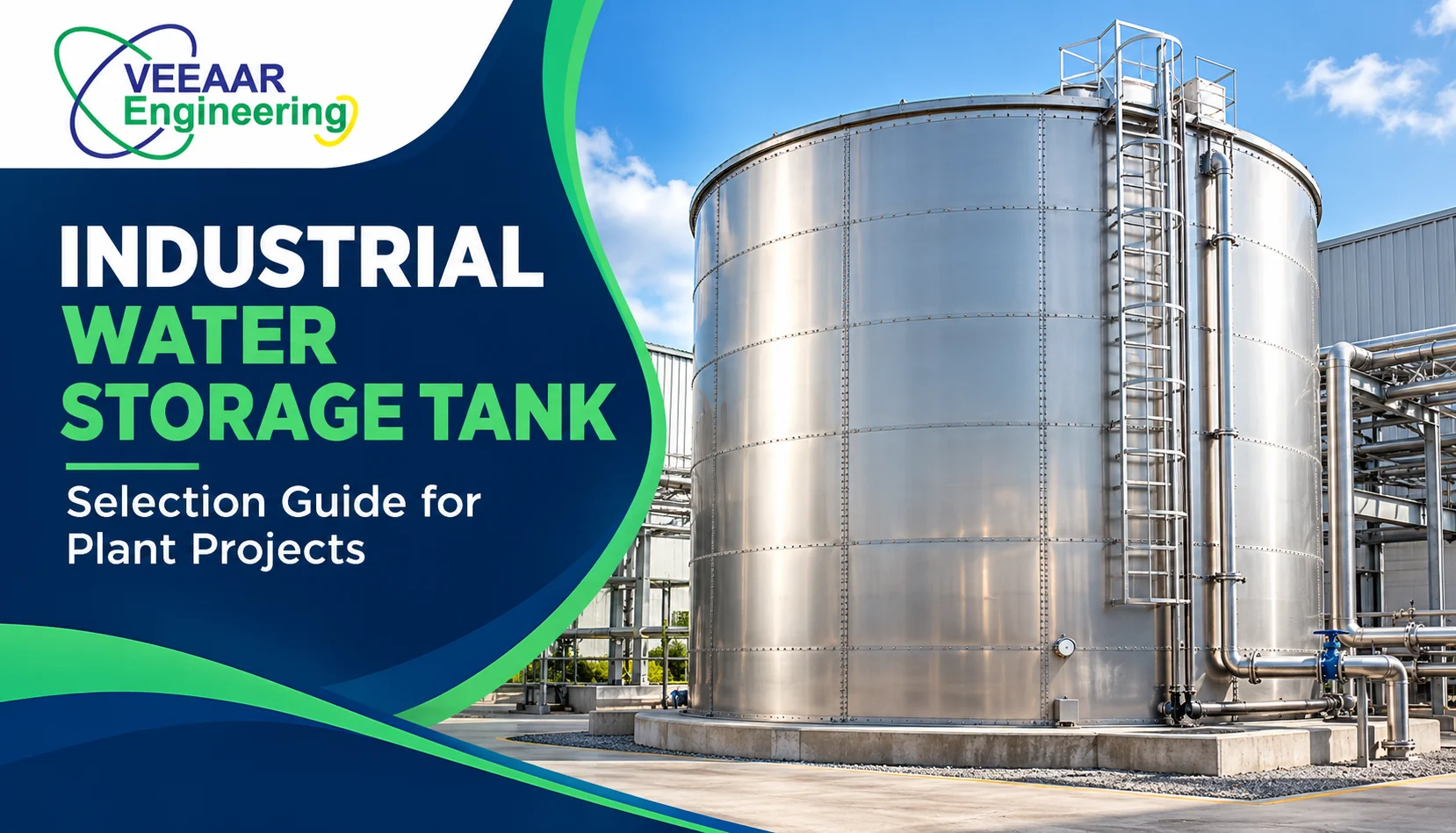
Map inflow and outflow over a representative operating period. Identify peak hourly draw, refill rate, shutdown conditions, emergency reserve and any process demand that cannot be interrupted. Separate normal operating volume from dead volume, freeboard and unusable residual. Veeaar Engineering lists water storage tanks and vesselsas an industrial offering; a project-specific duty statement helps the supplier propose a configuration instead of a generic catalogue capacity.
Calculate Usable Capacity, Not Just Nominal Volume
A first sizing model balances demand during the longest credible supply interruption against available replenishment. For a continuous process, consider average use, peak draw, minimum safe reserve, refill duration and allowance for planned cleaning. For intermittent demand, include the largest batch or simultaneous users. The result should be reviewed against the process owner’s operating philosophy and future expansion rather than a single rough daily-consumption number.
Clarify which volume is gross, working, emergency reserve and dead storage. Check low-level cut-outs, outlet elevation, overflow level and any sediment allowance. A larger tank can improve resilience but increases footprint, structural load, cleaning time and stored-water age. Multiple smaller tanks may allow maintenance without total shutdown, but introduce extra valves, interconnections and controls. Compare alternatives using the same reliability assumptions.
Assess Water Quality and Material Compatibility
Identify pH, dissolved solids, chloride, suspended solids, treatment chemicals, temperature and any contaminants that could affect the tank or stored water. Material selection should consider both chemical compatibility and service requirements. Corrosion, permeation, scaling, UV exposure and cleaning chemicals can affect long-term performance. Ask for the tank material, resin or lining system where relevant, reinforcement or structural basis, and the manufacturer’s compatibility limits.
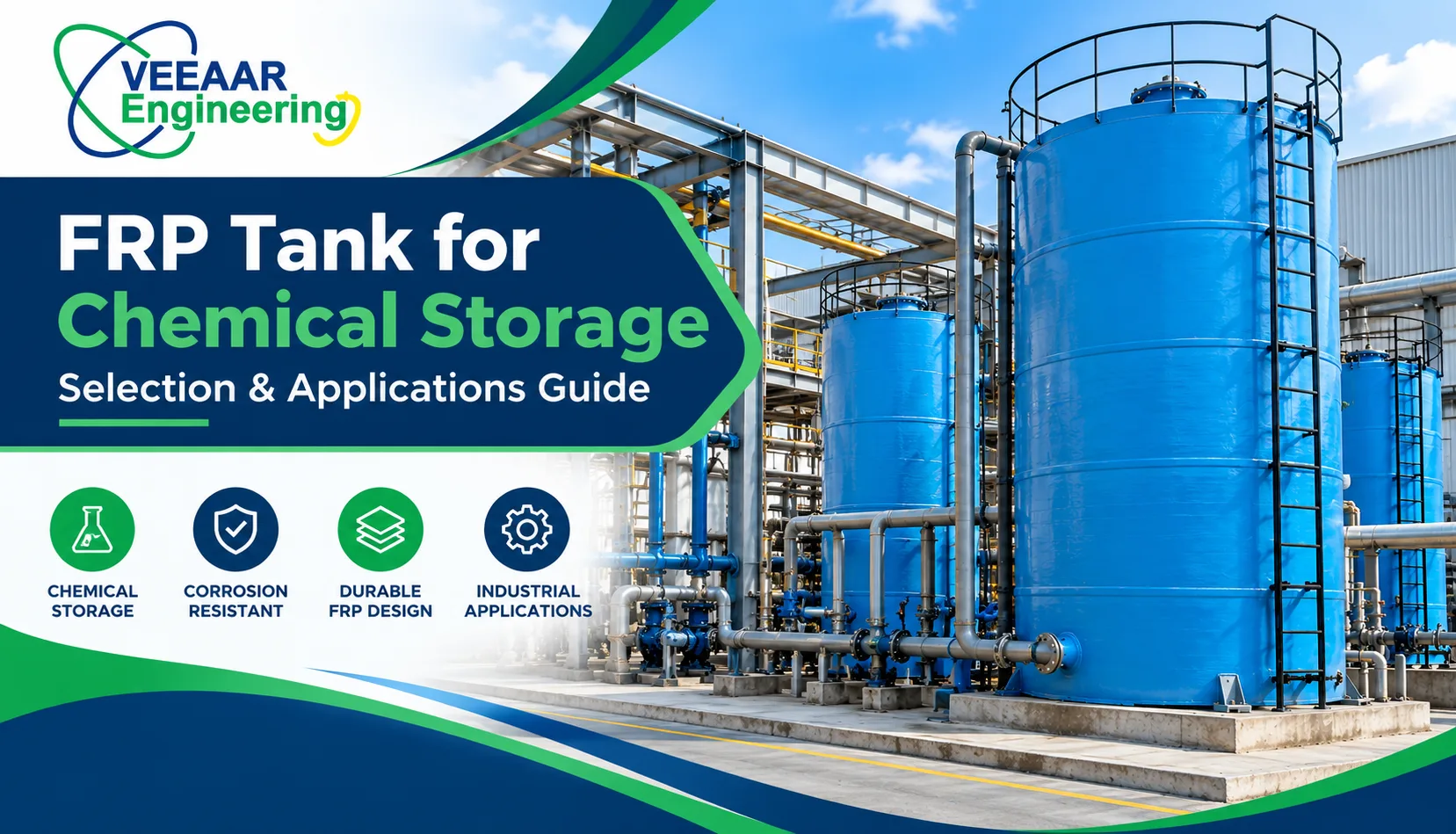
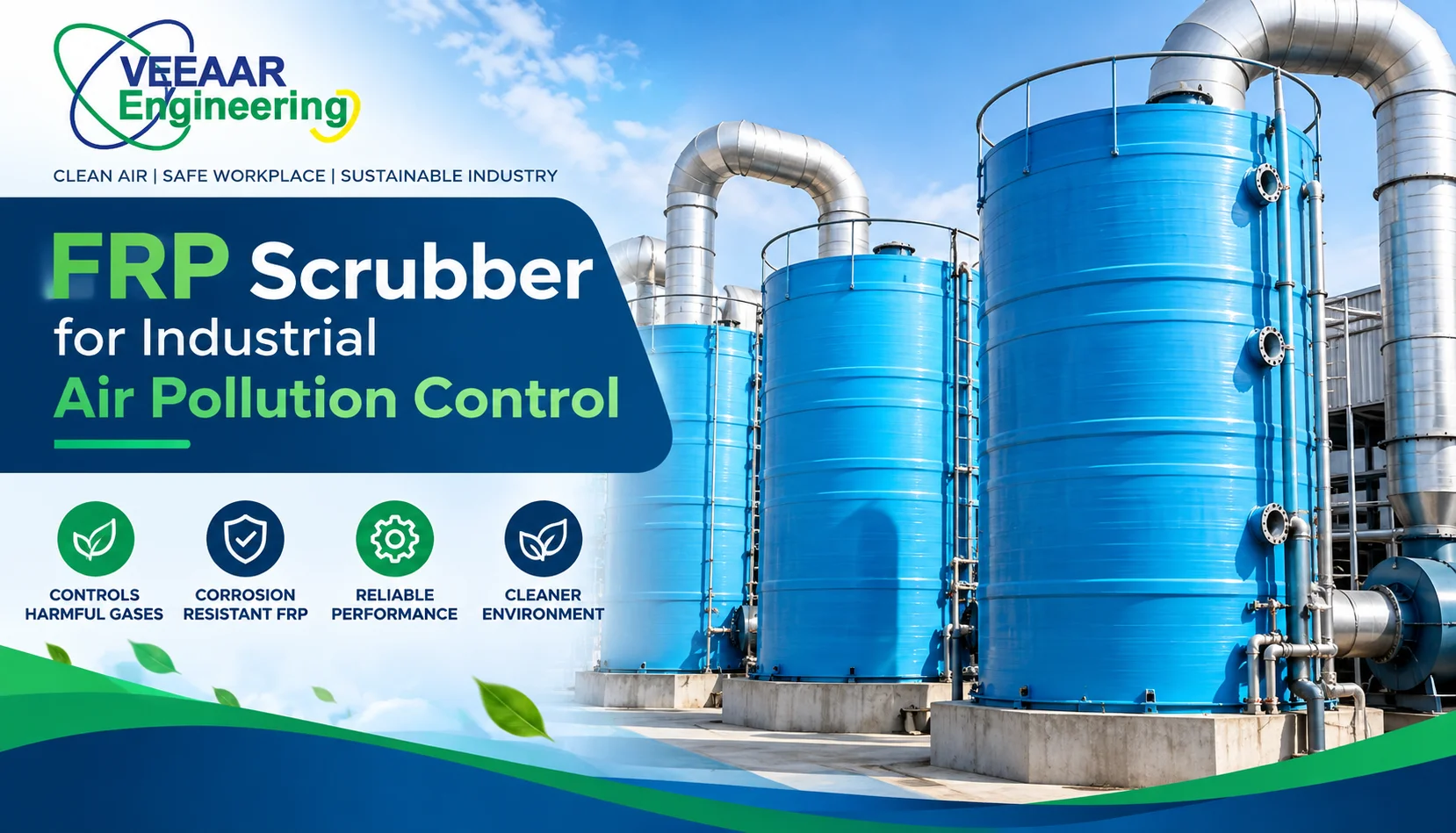
FRP and other polymer-based options may suit some corrosive or lightweight applications, but suitability depends on resin, laminate, temperature, chemical concentration, UV exposure and structural design. Metallic tanks may be appropriate for other conditions but require a defined corrosion-control and inspection strategy. No material is universally best. Veeaar presents FRP tanks and scrubber systems request product-specific compatibility confirmation for the actual water and cleaning regime.
Choose Tank Configuration and Installation Location
Compare vertical, horizontal, sectional or modular arrangements based on capacity, headroom, transport, access, installation sequence and maintenance. A sectional tank may fit a constrained building, while a one-piece unit can reduce joints but may face transport limits. Confirm nozzle orientation, manway position, ladder or platform access, overflow discharge, drain, vent and instrument locations before fabrication.
The site plan should preserve access for delivery, lifting, inspection and future replacement. Check door and corridor clearances, crane reach, overhead services, floor loading, ventilation, drainage and separation from heat or chemical sources. Consider whether the tank can be isolated and drained without affecting other services. If installed indoors, assess leak containment and water damage consequences. Outdoor installations need UV, weather, wind and temperature exposure review.
Foundation, Support and Structural Loads
The support system must safely carry tank dead weight, water weight, equipment, wind or seismic actions where applicable, and operating or maintenance loads. The substrate and foundation should be checked for bearing, settlement, levelness, drainage and access. A tank should not be placed on an assumed slab capacity simply because the footprint appears small; stored water is heavy and load distribution can differ from an empty vessel.
Obtain the filled and empty loads, support points, base dimensions, anchor requirements, nozzle loads and any imposed piping reactions. The structural designer should review the actual tank drawing and operating conditions. Avoid forcing a tank onto uneven supports, shimming with unapproved materials or connecting rigid pipe before settlement and movement allowances are considered. Record the approved foundation and installation method in the handover file.
Piping, Pumping and Hydraulic Interfaces
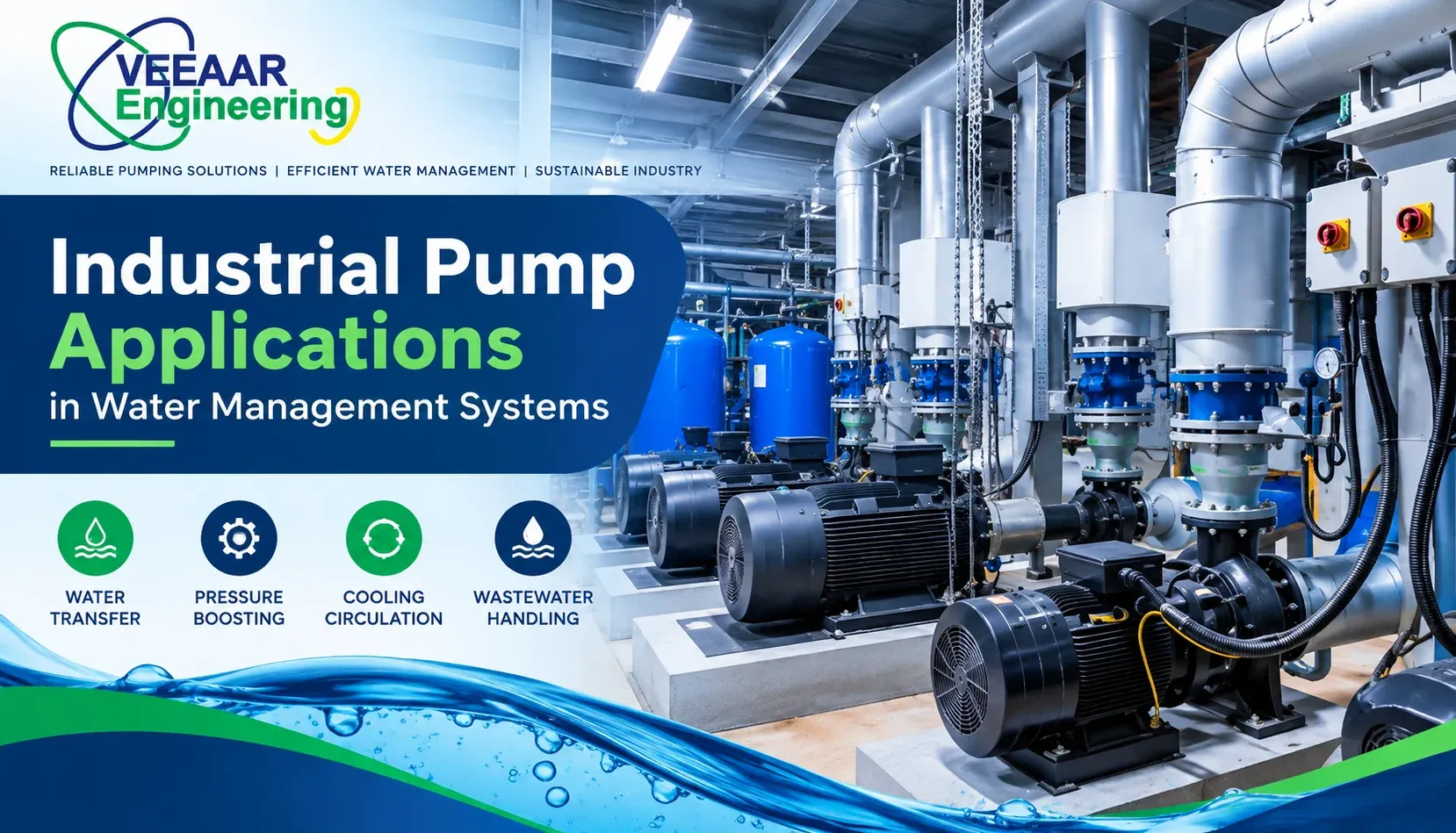
Tank capacity interacts with pumps, incoming supply, suction conditions, elevation, pressure and control logic. Confirm inlet flow, outlet duty, overflow capacity, drain arrangement, vents, level instruments, isolation valves and backflow controls as appropriate. Protect pump suction from vortexing or air entrainment using the design detail; a tank that stores enough water may still fail to deliver it at the required flow.
Coordinate pipe material and support with tank nozzles. Avoid transferring excessive loads, vibration or thermal movement into the vessel. Provide flexible connectors only where the design calls for them; they do not replace proper pipe supports. Define high-level alarm, low-level cut-out, overflow route, pump interlock and emergency operation. The P&ID and tank nozzle schedule should use the same tag numbers and elevations.
Hygiene, Cleaning and Inspection Access
For potable or hygiene-sensitive water, establish applicable material approvals and a cleaning/disinfection plan before procurement. Ensure the tank has access for safe internal inspection, drainage and removal of sediment. Dead legs, stagnant sections and inaccessible corners can impair water quality. The operating team should know when to isolate, drain, clean and return the tank to service under the site’s procedure.
For utility water, the inspection plan still matters: check seams, joints, supports, coatings, vents, screens, ladders, instruments and evidence of leakage or deformation. Safe entry requires site-specific confined-space controls and competent personnel; this guide is not a permit-to-work procedure. Provide safe external access and make isolation points reachable. Keep records of inspections, cleaning, repairs, material changes and water-quality checks.
Emergency Reserve, Firewater and Critical-Service Duties
Where stored volume supports an emergency or life-safety function, the operating philosophy and applicable codes may prescribe reserve, availability, refill, access or inspection conditions. Do not size that reserve by applying a generic percentage to normal process demand. Identify the authority, insurer, fire-protection engineer or owner standard that governs the project and have the responsible professional confirm the basis.
Separate critical reserve from routine draw where the design requires it, and protect the reserve from accidental consumption through appropriate controls. Confirm system behaviour during power loss, pump failure, maintenance or a simultaneous demand event. The tank, suction arrangement, valves, pumps and controls should be reviewed together. This guide does not provide fire-protection design values; use the project-specific hazard assessment and current requirements.
Water Quality, Turnover and Seasonal Operation
Storage can change water temperature, quality or biological condition, especially when turnover is low or the tank is exposed to heat and sunlight. Define sampling points, treatment, cleaning and turnover criteria with the water-quality or process specialist. Consider whether the flow pattern creates stagnant zones and whether mixing is needed and compatible with the duty.
Seasonal shutdowns need a controlled preservation plan: isolate, drain or maintain the specified water condition, protect openings and recommission under the site procedure. Do not leave a vessel partially filled without considering material limits, biological growth, freezing or thermal expansion where relevant. Record sample results, maintenance, chemical additions and return-to-service checks so operators know what is inside the tank and whether it is suitable for use.
Pressure, Vacuum and Venting Limits
Many atmospheric storage tanks are not pressure vessels and are not designed to resist significant internal pressure or vacuum. A blocked vent, fast pump-out, rapid fill, steam cleaning or an incorrectly isolated line can create a condition outside the vessel’s rating. Confirm the allowable pressure and vacuum from the design documents and protect the tank with correctly sized and maintained vents or other safeguards where the engineering basis requires them.
Review operating procedures for valve line-up and pump sequencing. Make sure screens, flame arrestors or other vent devices, if present, are not blocked by debris, ice or insects. Do not pressure-test a storage tank using compressed air unless a qualified engineer and approved procedure specifically permit it; stored energy can make a failure dangerous. Any process that may expose the tank to pressure should trigger a design review before purchase or modification.
Risk-Based Handover and Asset Records
At handover, provide approved drawings, material and compatibility information, support and nozzle loads, foundation record, test results, instrument settings, operating limits, cleaning instructions, spare parts and warranty contacts. Place these in the plant asset system with a unique equipment tag. Record the initial condition with photos and baseline readings to help distinguish normal ageing from later damage.
Assign an owner for inspections, alarms, water-quality checks and change control. Include the tank in management-of-change review when pumps, piping, process demand, treatment chemicals or site layout change. The vessel may outlast the original project team, so records should be understandable without relying on informal knowledge held by one supplier or operator. A defined handover makes safe maintenance practical and auditable.
Procurement Data Sheet and Supplier Comparison
Send suppliers one data sheet with service, required usable capacity, dimensions or space envelope, material, water chemistry, design conditions, support arrangement, nozzles, instruments, finish, inspection requirements, delivery and installation scope. Ask each bidder to list deviations, exclusions, loads, drawings, warranty terms and maintenance requirements. A single comparable schedule prevents a low quote from appearing attractive simply because it excludes a foundation or critical accessories.
Request a general arrangement drawing, nozzle schedule, material data, design calculations appropriate to the vessel, installation instructions, inspection/test records and recommended maintenance. Confirm who designs pipe supports, access platforms, electrical controls and the foundation. Veeaar’s storage-tank pageand supplier information describe its broader equipment scope; quote acceptance should depend on the submitted design and project specification.
Installation, Testing and Commissioning
Before installation, verify the foundation, access route, tank identity, orientation, support level and nozzle positions against approved drawings. Use lifting points and methods approved for the actual tank; do not sling around unsupported nozzles or fittings. Inspect for transport damage, cracks, coating defects, contamination and loose components before the vessel is placed. Keep openings protected until piping and commissioning are ready.
Testing should follow the manufacturer’s and project’s approved procedure, with the test medium, pressure or fill level, duration, inspection points and acceptance criteria defined in advance. A hydrostatic fill test is not automatically appropriate for every tank or foundation without structural review. Check leakage, level instruments, alarms, pump sequences, overflow and drain operation. Record results and any repair/retest before process water is introduced.
Operating Costs, Water Age and Energy Use
The total cost includes purchase, foundation, transport, installation, pumping, treatment, inspection, cleaning, energy, repairs and downtime. A tank that is oversized may raise cleaning and water-age concerns; an undersized one can cause production interruption or excessive pump cycling. Compare lifecycle cost over the expected operating period and include realistic maintenance assumptions rather than treating the initial supply price as the entire investment.
Water turnover and temperature can affect quality, especially in low-use periods. Work with the site’s water-quality or process specialist to define monitoring and turnover practices. Reduce unnecessary dead volume and avoid bypasses that create stagnant pockets. If pumps fill the tank during off-peak periods, confirm that the tariff benefit does not compromise water freshness or process availability.
Failure Modes and Preventive Checks
Common issues include insufficient reserve, blocked vents, poorly routed overflow, level sensor drift, leaking nozzles, foundation settlement, incompatible material, unsupported piping, corrosion, contamination and inaccessible inspection points. Many can be reduced by a pre-installation review that includes operations and maintenance, not only procurement. Create a failure-mode checklist based on consequence and likelihood for the actual service.
During routine checks, compare level indication to a physical or independent reference where safe, inspect supports and connections, verify alarm response, observe overflow and drain condition, and record unusual noise, vibration or leakage. After a modification, review nozzle loads, pipe supports and control logic. Any pressure or vacuum exposure should be treated carefully because many storage tanks are not designed as pressure vessels.
How to Evaluate a Tank Supplier Proposal
A good proposal states the intended service, gross and usable capacity, material and compatibility basis, design assumptions, support and foundation loads, nozzles, accessories, instrumentation, testing, delivery, installation, warranty and operating limitations. Ask the supplier to identify information still required from the buyer. Do not accept a claim of “maintenance free” or “suitable for all water” without specific supporting conditions and limitations.
Review the drawing against site constraints and maintenance access. Confirm who signs off the structural interface and whether the supplier’s guarantee excludes poor water chemistry, unapproved cleaning agents, foundation settlement or unsupported piping. Veeaar lists FRP storage and scrubber applications; where that material is proposed, request the exact laminate/resin information and written compatibility confirmation.
Final Specification Review
Before placing an order, document the design duty, filled load, material basis, foundation, piping, controls, inspection method and responsible approvers. This record makes vendor proposals easier to compare and helps future maintenance teams understand why the selected tank fits the process.
Make unresolved data visible. If water analysis, refill rate or support conditions are not yet confirmed, identify the assumption, owner and deadline rather than allowing a supplier to interpret the gap silently. A controlled revision at purchase prevents avoidable changes after fabrication starts.
Frequently Asked Questions
1. How do I calculate industrial water tank capacity?
Model demand during the relevant supply interruption or peak-use period, then account for refill rate, usable volume, reserve, dead volume and operating policy.
2. Is nominal tank volume the same as usable capacity?
No. Freeboard, outlet elevation, dead volume and operating limits reduce usable capacity.
3. Which material is best for an industrial water tank?
The best material depends on water chemistry, temperature, hygiene needs, structural loads, site exposure, maintenance and project requirements.
4. Can FRP tanks store every chemical or water type?
No. Compatibility depends on resin, laminate, concentration, temperature, UV and structural design. Obtain written confirmation for the actual service.
5. Does a tank need a special foundation?
It needs supports and foundation designed for its filled and operating loads, base geometry, soil and site conditions.
6. Why are vent and overflow sizes important?
They help control pressure/vacuum or excess incoming flow according to design. Their sizing and discharge routing must match the system.
7. How should high and low levels be controlled?
Select instruments, alarms, pump interlocks and failure responses based on the process risk and control-system design.
8. Can the tank nozzle support connected piping?
Only if explicitly designed for those loads. Pipe supports should prevent unwanted force, vibration and movement at the nozzle.
9. What documents should a supplier provide?
At minimum, project-specific drawings, material information, loads, installation instructions, testing records, deviations and maintenance guidance.
10. Is hydrostatic testing always required?
Not automatically. The project and manufacturer should define a safe approved test based on tank design and foundation capacity.
11. How often should a storage tank be inspected?
Use a site-specific maintenance and water-quality plan; inspect after abnormal events or modifications and follow relevant requirements.
12. Can two smaller tanks be better than one large tank?
They may improve maintenance flexibility or redundancy, but add valves, controls, interconnections and potential common failure points.
13. Does this guide cover pressure vessels?
No. Storage tanks and pressure vessels have different design obligations. Confirm the equipment category and design conditions with the responsible engineer.
14. What should I send for a quotation?
Send service, water analysis, usable volume, supply/demand profile, site envelope, filled loads, foundation data, nozzles, controls and delivery constraints.
Specify the Water Duty Before You Compare Tank Quotes
Prepare the water analysis, operating profile, usable-volume requirement, available footprint, foundation information and piping/control interfaces before requesting a proposal. Veeaar Engineering presents industrial water storage tanks and vessels use its contact route to request a project-specific scope, material basis, drawing and installation requirements.